
Road Salt on Work Trucks: Where It Collects and Why It Matters
Trash Titans Plus ·
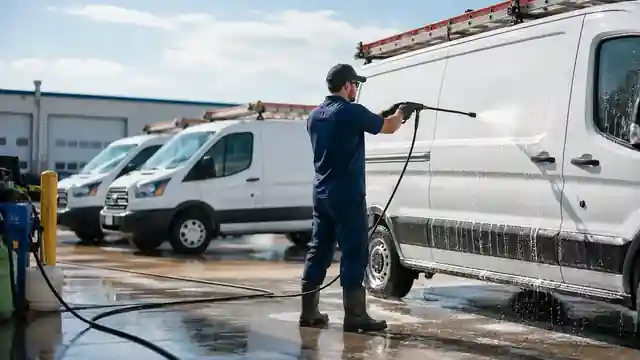
Road salt does not stay where you first see it. A truck can have a light white film on the doors while heavier residue is sitting lower on the vehicle, around wheel openings, behind tires, and on surfaces that receive constant road spray.
For a work fleet, winter grime is partly an appearance problem and partly a maintenance question. The important point is not to make dramatic claims about salt. It is to understand where the residue goes and why a quick wipe of the visible panels does not tell the whole story.
Road spray pushes residue low and backward
A moving vehicle throws water and road material away from the tires. That spray hits rocker areas, lower doors, wheel wells, bumpers, steps, mud flaps, and the rear of the vehicle.
On vans and box trucks, large flat side panels can show a haze above that lower zone. On pickups, the bed sides and tailgate may collect a different pattern from the cab. Service bodies add compartments, handles, steps, and edges where film can gather.
The fleet washing page treats vehicle type as part of the quote because the geometry changes where the dirt ends up. The same scoping issue is explained in what makes fleet washing different.
Salt film is easier to notice after the road dries
During wet weather, a vehicle can simply look wet and dirty. After the moisture evaporates, the remaining residue becomes more obvious.
That is when light-colored streaks or a dull film may show up across paint, glass edges, trim, and lower panels.
A branded vehicle can make the contrast stronger. Clean graphics and bright lettering are designed to stand out, so a gray-white winter film can make the whole unit look tired even when the truck is mechanically fine.
Wheel wells and lower edges deserve attention
People naturally look at doors, hood, and windshield height because those are the easiest areas to see. The dirtiest sections of a winter work truck are often lower.
Wheel wells receive repeated spray. Steps and rocker areas catch material from shoes and tires. The back of a van or box body sits in turbulent air and can collect a heavy film.
If the goal is to improve winter appearance, it helps to include those areas in the scope rather than judging the job from the side panels alone.
Different vehicles in the same fleet can look completely different
A high-roof cargo van, pickup, utility-body truck, and box truck do not move air and road spray the same way. They also do not have the same surfaces.
A fleet with mixed vehicles may need a scope that accounts for each group. The business does not need to create a technical inventory. A simple count by vehicle type is enough to start.
For example:
- 6 cargo vans
- 3 pickups
- 2 utility-body trucks
- 1 box truck
That tells more about the washing job than “12 vehicles.”
Timing affects how much residue is present
A vehicle driven every day during a week of treated roads may accumulate film quickly. Another unit that stays parked may barely change.
That is one reason a fleet manager should think in terms of use, not only calendar dates.
If vehicles travel different routes or have different workloads, they may not need attention at the same moment. A quote can still cover the fleet while recognizing that some units are in a different condition from others.
Why a single winter wash is not a universal plan
There is no one winter schedule that makes sense for every business. A fleet that drives long highway miles has different exposure from a local service fleet with shorter trips. A company with indoor parking has different conditions from vehicles stored outside.
Weather changes too. Some weeks create more road treatment and spray than others. Public salt resources from the U.S. Environmental Protection Agency describe how widely winter road treatment is used and how it moves with water.
The useful approach is to watch the vehicles and the operating pattern. When residue is building to the point that appearance or upkeep is becoming a concern, the business has a real reason to act.
For a winter fleet quote, send the useful details
For a winter fleet quote, include the same basics you would at any other time plus the condition you are seeing.
Send the vehicle count, vehicle types, job location, and the main concern. If the issue is heavy lower-body salt film, say that. If the company cares most about keeping branded panels readable, say that.
Mention when the vehicles are normally together and available. Winter work schedules can be unpredictable, so timing should not be left until the end.
The quote form gives you a place to include those details.
Does this mean every white mark is road salt?
No. Winter vehicles carry a mixture of road treatment residue, dirt, spray, and ordinary grime. Appearance alone does not identify every substance.
That matters because the goal is not to diagnose a laboratory sample from a photograph. The goal is to understand the condition well enough to scope the wash.
If a specific mark remains after general cleaning, it may need separate attention. The same expectation-setting used for concrete stains applies here: general soil and a stubborn isolated mark are not always the same problem.
Think about the fleet as moving signage
For HVAC, plumbing, electrical, and other service companies, the vehicle often arrives before the technician reaches the door. Customers see the truck in the driveway, at the curb, or in a parking lot.
That does not mean a work truck has to be spotless every day. It means consistent appearance has value because the vehicle carries the company name everywhere it goes.
Trash Titans Plus is based in Newark, Ohio. If you want to check whether a fleet location can be served, the service area page explains why availability is confirmed from the actual job instead of one blanket mileage radius.
Winter makes work vehicles dirty. That is normal. A useful washing plan recognizes where the residue collects, which vehicles are affected, and when the fleet can realistically be available.
What about the underside of the vehicle?
People often use “road salt removal” to mean everything from washing the lower doors to flushing the underside of a truck.
Those are not the same scope.
Undercarriage access can involve equipment height, safety, drainage, and a very different setup from an exterior wash. It should never be assumed just because the vehicle has winter film.
If underside work is important to the fleet, put it in the request and ask whether it is currently available.
Salt, mud, and ordinary grime can layer together
A winter work truck rarely carries one pure substance.
A wet week can put road treatment residue on top of mud from a jobsite. Then a dry day adds dust. A later rain creates streaks through the existing film.
By the time the vehicle is washed, the surface may show several layers created at different times.
This is one reason a fleet manager should describe the visible condition instead of trying to identify every material on the truck.
Door handles, steps, and entry points show use
Work vehicles are touched constantly.
Drivers climb in and out wearing boots and gloves. Tools and materials move through doors. Steps collect what gets tracked from the ground.
Those high-use areas can look dirty even when the broad body panel is relatively clean.
If the fleet's appearance goal includes entry areas, mention them. A quote based only on side panels may not reflect the part of the truck employees and customers interact with most often.
Winter appearance can affect fleet consistency
A business may have several identical vans and still see large differences after a snow or treatment event.
One driver may travel farther. One route may use heavily treated roads. One vehicle may park under cover while another stays outside.
The fleet can look inconsistent even when each unit is being maintained normally.
That is why condition-based decisions often make more sense than pretending every truck needs the same attention on the same calendar day.
Why clean water management belongs in the planning conversation
Washing winter residue means the water and removed material have to go somewhere.
The exact requirements depend on the job location, local rules, and the washing setup. A company should not promise a water-handling method it has not confirmed.
Fleet operators can help by describing the yard surface, drainage situation, and any site restrictions they already know about.
That gives the washing company a chance to evaluate the location before work is scheduled rather than discovering a problem after equipment arrives.
Back to BlogFleet and work vehicles