Why Recycling Bins Get Dirty Even When They Mostly Hold Dry Material
Trash Titans Plus ·
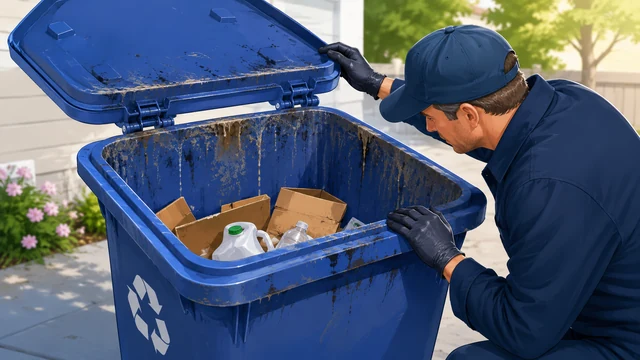
A recycling cart can look like it should stay cleaner than a trash cart. Most of what goes into it is cardboard, cans, bottles, jars, and other material people think of as dry.
Then summer arrives, the lid opens, and the bin smells or feels sticky.
The reason is simple: “recyclable” does not mean “free of residue.”
Containers carry what was inside them
A beverage can can be empty and still hold a small amount of liquid. A food jar can be scraped out without being spotless. A takeout container may have sauce around the edges. Cardboard can absorb liquid from something placed beside it.
Once those items sit together in a cart, the residue can move.
It only takes a little liquid in the bottom of a large container to create a mess that is much more noticeable than the amount suggests.
If you want to ask whether a specific recycling container can be included in a job, start with the trash can cleaning page and identify the container type in the request.
“Empty” packaging is not always dry packaging
Think about a plastic milk jug, a soda bottle, or a jar. The product can be gone while a thin film remains.
If the lid is off, that film can drain. If the container is crushed or tipped, whatever remains may end up on the cart wall or floor.
The same is true for aluminum cans. A few drops from many cans can become a small pool.
That does not mean residents are recycling incorrectly. It means real household packaging is not laboratory-clean.
Cardboard can spread the mess
Cardboard and paper fibers absorb moisture.
If a leaking container touches cardboard, the liquid may spread across a larger area instead of staying in one spot. When wet paper dries against the cart, fibers can stick to the plastic.
That creates the odd situation where the cart looks dusty and sticky at the same time.
Loose paper can also work into the molded grooves at the bottom, where it is harder to remove with a casual rinse.
Warmth changes how the bin smells
Food residue does not stop being organic material because the package belongs in recycling.
Warm temperatures can make small amounts of leftover material more noticeable. A cart sitting in direct sun may smell stronger than the same cart during cool weather.
The lid can trap that odor until the next time someone opens it. The same residue pattern is explained in why a trash can can smell after pickup.
This is one reason recycling bins can surprise people. The visible contents look cleaner than household trash, so the smell feels out of proportion.
Rainwater can add to the problem
If the lid does not close or the cart is left open, rain can enter.
Water alone is not the odor source, but it can spread residue and keep paper, food film, and other material damp longer.
A fully closed lid helps keep outside water from joining whatever is already inside the container.
Why a quick rinse may leave paper and film behind
A hose reaches open surfaces well. It may have more trouble with paper stuck into ribs, dried film near the bottom, or material under the rim.
Water also needs somewhere to drain.
If a cart is rinsed and then closed while still wet, the interior may stay damp longer than expected. Letting it dry matters.
Do not mix household cleaners because the recycling bin smells worse than expected. More chemicals can introduce unnecessary risk.
What can households do before recycling day?
Local recycling rules control what belongs in the cart, so residents should follow their waste provider's instructions. For the container itself, a few basic habits can reduce residue:
- Empty containers as fully as practical.
- Follow local instructions about rinsing recyclable containers.
- Keep the cart lid closed.
- Deal with obvious leaks when they happen.
- Avoid putting loose food or liquid into the recycling bin.
- Let the cart dry if it is rinsed.
Newark residents can check current municipal waste and recycling information through the City of Newark. Trash Titans Plus does not control collection rules or schedules.
Can trash and recycling carts be requested together?
The answer depends on the containers and what is currently available.
Do not assume every bin is automatically included. Put both container types in the same request. That gives the company the information needed to confirm the scope.
The quote form has a service description field where you can write something as simple as “one trash cart and one recycling cart.”
If you have other service questions, the FAQ explains how pricing, location, and multi-service requests are handled.
A recycling bin gets dirty for the same basic reason many household containers do: a small amount of residue leaves the packaging and ends up where it was never meant to stay. Once you look at the liquids, paper fibers, warm weather, and hard-to-reach grooves, the mess makes much more sense.
Crushed containers can release more residue
Many people crush cans or bottles to save space. That can be useful for volume, but it also changes where any remaining liquid goes.
A container that held a small amount of product may release it when crushed. If several items do that in the same cart, the liquid can collect at the bottom even though each individual item seemed almost empty.
Again, the issue is not that recycling is unusually dirty. It is that small amounts add together.
Sticky film attracts loose paper and dust
Once a sugary or oily film is on the plastic, other material can stick to it.
Paper fibers, dust, tiny pieces of cardboard, and outdoor debris can turn a thin invisible residue into something that looks much worse.
That mixed material can dry into corners and grooves.
The cart may then need more than a quick spray because the problem is no longer only liquid.
Collection equipment can leave the cart looking different
Carts are lifted and emptied mechanically. The process is fast and designed to remove the contents, not detail the container.
A piece of paper stuck under a rim or a film on the bottom can stay behind after the cart is returned.
That is normal for collection. The waste provider's job is to collect accepted material. Container cleaning is a separate question.
What if local rules say containers should be rinsed?
Follow the local program's current instructions.
Municipal recycling rules can change, and different programs accept different materials. For Newark, current recycling guidance should come from the city rather than an old online summary.
Why trash and recycling carts can collect residue in the same places
The useful connection is the container.
Both types of carts can collect residue in the same physical places: bottom ribs, corners, under the rim, lid channels, and hinge areas.
That shared geometry explains the problem even when the contents are different.
If you want a recycling bin included, identify the container type in the quote request so availability can be confirmed.
Back to BlogTrash cans and carts