What Information Helps When Requesting a Trash Truck Washing Quote?
Trash Titans Plus ·
A trash truck washing quote can get complicated quickly if the request begins and ends with “we have trucks that need washed.”
The fastest way to simplify it is to answer five questions: what equipment, how many units, where are they, what areas need attention, and when are the trucks available?
Everything else can follow from those basics.
What kind of truck is it?
You do not need a full manufacturer specification.
A simple description such as rear-loader, front-loader, side-loader, roll-off truck, or “not sure, I can send a photo” is useful.
Different equipment has different body shapes and working areas. That changes access and scope.
The trash truck washing page keeps the initial request broad enough that you can describe the equipment without pretending every truck is identical.
How many units are involved?
Count matters for setup, timing, and price.
If the fleet is mixed, group similar equipment. Six rear-loaders and two roll-off trucks is more useful than “eight trucks.”
If only part of the fleet needs attention, give that number rather than the total number the company owns.
Where will the work happen?
Send the city or ZIP code and the actual job location when relevant.
Trash Titans Plus is based in Newark, Ohio, and travel can vary by job. The service area page explains why availability is confirmed from the real request.
Do not wait until the end of the conversation to mention that the equipment is stored somewhere different from the business office.
Which areas need cleaning?
This is the question most likely to prevent a mismatch.
An exterior wash can mean cab and body sides to one person and a much broader set of surfaces to another.
Name the areas that matter. If a working area, rear zone, hopper-related area, chassis area, or other specific section is part of the request, say so.
The quote can confirm what is available instead of assuming it is automatically included.
What is the current condition?
“Normal route dirt” and “heavy dried residue in a specific area” are not the same starting point.
Describe what you see.
If the request is driven by appearance, say that. If one part of the truck has a heavier condition than the rest, identify it.
Plain language is fine.
When are the trucks together?
Refuse equipment has a job to do. Route timing may control when washing is even possible.
Tell the company when units normally return, whether all trucks are available at once, and whether any are on staggered schedules.
A quote that ignores availability can be accurate on paper and impossible to execute.
What about water and yard access?
If there are known yard restrictions, access gates, limited space, or other operating details, include them.
You do not need to solve the water-handling plan in the form. You do need to mention any fact you already know will affect the setup.
How much detail is too much?
You do not need to write an equipment manual.
A strong first request can fit in a short paragraph:
“Five rear-loaders and two side-loaders at our yard, usually back after 4:30 p.m. We want the exterior reviewed plus the rear working areas. Heavy route film and residue. Please confirm what can be included.”
That is enough to start a real conversation.
Use the quote form to send the details.
A trash truck quote becomes easier when the scope is concrete. Equipment, count, location, areas, condition, and timing are the pieces that turn “wash our trucks” into a job both sides can understand.
Should photos be included?
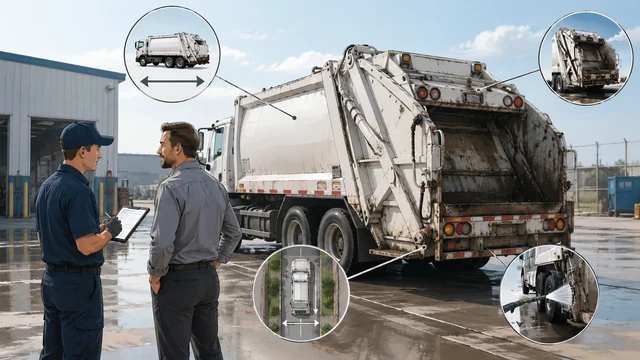
Photos can help when the condition or equipment type is difficult to describe, but they should support the scope rather than replace it.
A side photo may show the vehicle type and exterior condition. A closer image can point out the area driving the request.
Do not send unsafe photos taken while equipment is moving or working. The basic written details still matter even when images are available.
What if you want work-truck fleet washing too?
Keep the categories separate in the request.
HVAC vans, plumbing trucks, pickups, and other service vehicles belong under work-truck fleet washing. Refuse trucks belong under the refuse category.
If one business has both, include both groups and label them clearly. The quote can then review the scopes without pretending the equipment is the same.
That small distinction keeps the quote from mixing two very different kinds of equipment.
Back to BlogRefuse truck cleaning