Should Concrete Be Cleaned Before Sealing? What Homeowners Should Know
Trash Titans Plus ·
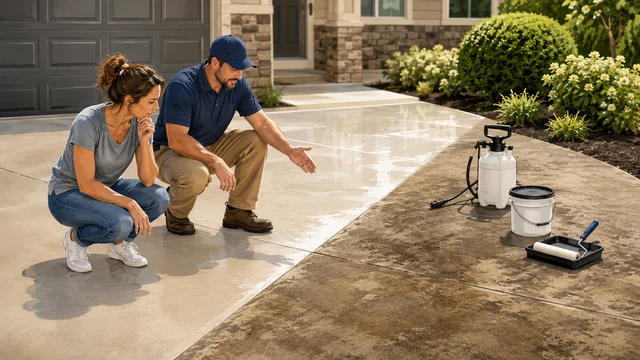
A freshly cleaned driveway often leads to the next question: should the concrete be sealed now?
Cleaning and sealing are connected, but they are not the same service and they should not be treated like one automatic two-step package. Sealing is a separate service decision from cleaning. The goal here is to explain why cleaning is usually part of the preparation conversation when a homeowner is considering a sealer from another qualified provider.
Sealer should not trap dirt underneath it
A sealer is applied over the concrete surface. If the surface still has soil, loose material, organic buildup, or other contamination on it, that material can interfere with the finished appearance or how the product performs.
That is the basic reason cleaning comes first.
The driveway cleaning page deals with the cleaning side of the job. Sealer selection, application, cure time, and compatibility belong to the product manufacturer or the contractor performing that work.
Clean does not mean ready this minute
A driveway can look clean and still contain moisture.
That matters because many coatings and sealers have specific surface-moisture requirements. The correct wait time depends on the product, weather, concrete, and application instructions.
There is no responsible universal answer such as “always seal the next morning.”
If sealing is planned, the person applying the product should decide when the concrete meets the product requirements.
Old coatings change the preparation question
Some concrete has been sealed before. Some has a coating, stain, or treatment the current homeowner may not even know about.
Cleaning a previously treated slab is different from assuming bare concrete.
If you are planning to have someone seal the driveway, tell the cleaning company and the sealing contractor about any known prior treatment. It is better to surface that question before work begins than after a product is already being applied.
Stains may still be visible after general cleaning
Oil, rust, tire marks, and other stains can behave differently from ordinary dirt.
A driveway can be much cleaner overall and still have an isolated mark that matters for the appearance of a clear sealer.
That is why stain expectations should be discussed before sealing. A sealer does not erase the history of the concrete. Depending on the product, it may even make some color differences more noticeable.
If there is a stain that concerns you, include it in the quote request for the cleaning work and discuss it separately with the person doing the sealing.
Surface damage is not a cleaning problem
Cracks, spalling, scaling, failing repairs, or other concrete damage deserve attention before a coating decision.
Cleaning can reveal the surface more clearly, which is useful, but it does not repair structural or material problems.
A cleaning company should not pretend a pressure washer is a concrete repair tool.
Why aggressive cleaning before sealing can backfire
If a homeowner believes the goal is to make the surface “as raw as possible,” there can be a temptation to use excessive pressure.
More force is not automatically better preparation.
Concrete can be etched or marked. The correct cleaning approach should remove unwanted material while respecting the condition of the slab.
The broader pressure washing page explains why surface condition controls the method.
Questions for the sealing contractor
Before anyone schedules the sequence, ask the contractor or product professional handling the sealing:
- Does the concrete need to be completely dry?
- How long do they want after washing?
- Are there temperature or weather limits?
- Does an old coating need to be removed?
- Are there stains that need special preparation?
- What condition would make them postpone the application?
Those answers should come from the party responsible for the sealer, not from generic internet advice.
Tell the cleaning company about the sealing plan
Tell them you are cleaning in preparation for possible sealing.
Point out stains, previous coatings if known, repaired areas, and any part of the driveway that behaves differently after rain.
That context helps prevent the cleaning job from being treated as ordinary cosmetic work when another contractor has a later step planned.
Cleaning before sealing is not complicated in principle. The concrete should be clean, the surface should be in suitable condition, and the next product should be applied according to its own requirements. The mistake is turning those three separate decisions into one automatic promise.
Back to BlogPressure washing and surfaces