
Box Trucks and Vans: Why Large Flat Panels Show Dirt So Quickly
Trash Titans Plus ·
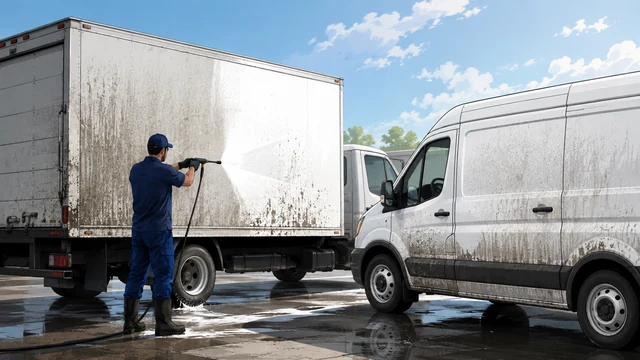
Box trucks and cargo vans are built around usable space, not easy washing. That shape creates broad vertical panels, long roof edges, rear doors, steps, handles, hinges, and lower areas that collect road film in different ways.
When the vehicle carries a company logo, every streak has a clean graphic sitting next to it for comparison.
That is why box trucks and vans deserve their own look inside a fleet washing quote.
Flat panels make uneven film obvious
A pickup has curves, wheel arches, a bed, and body lines that break up the view. A box body can present a large flat side like a billboard.
Any difference in the film becomes easy to see.
A section washed by rain may look lighter. A dirty trail below a roof edge may stand out. Road spray can create a darker band near the bottom while the upper panel stays cleaner.
On a plain white box, that contrast can be noticeable from across a parking lot.
Graphics raise the visual standard without changing the work
A company invests in lettering, logos, phone numbers, and colors because it wants people to notice the vehicle.
The same visibility means people notice when the surface around the graphics is dull.
This is not an argument for keeping a work truck showroom-clean. A van that spends the day on service calls is going to pick up dirt.
The practical goal is consistency. When several branded vehicles are parked together, one heavily streaked unit can look different from the rest of the fleet.
The fleet washing page is built around that work-vehicle use case.
Rear doors collect their own kind of grime
The rear of a van or box truck sits in turbulent air. Water, road film, and dust can build differently there than on the sides.
Hinges, latches, door seals, liftgate components, steps, and bumper surfaces create small protected areas. Those edges may hold material after a broad panel looks better.
If the rear is the part customers see most often when a vehicle is parked at a job, it belongs in the scope.
Roof height changes access
High-roof vans and box bodies add a simple question: what can be safely reached?
A tall flat surface that looks easy from the ground may require a different plan once roof edges, upper corners, and clearance are considered.
This is another reason per-vehicle pricing can be misleading without vehicle type.
A standard cargo van and a tall box truck may both count as one vehicle on a fleet list, but they are not one unit of identical work.
Ladders, racks, and mounted equipment create more edges
Trade fleets often add ladder racks, conduit carriers, toolboxes, steps, safety markings, and equipment around the vehicle.
These accessories do useful work. They also create more surfaces and more sheltered points for dust and film.
A quote does not need a diagram. It does need a note if a group of vehicles has equipment that changes access or the cleaning scope.
Decals and wraps deserve care
Vehicle graphics are not all the same age or material. Some fleets have factory paint with cut vinyl lettering. Others use larger wraps. An older graphic may already have lifting edges or damage.
If you know a wrap or decal is failing, mention it.
Cleaning should not be used to hide a pre-existing graphics problem. A quick inspection before work helps separate “dirty” from “already damaged.”
Mixed fleets need grouping, not complexity
If a company has 20 vehicles, nobody needs a 20-page inventory.
Group similar units:
- 8 standard cargo vans
- 5 high-roof vans
- 4 pickups
- 3 box trucks
Then add the details that change the job, such as heavy racks, a liftgate, or a different parking location.
That is usually enough to make the first conversation useful.
When are the vehicles available?
Fleet washing is an operating problem as much as a cleaning problem.
A box truck may return later than the vans. Service vehicles may leave at different times. Some units may be on call.
Tell the company when the largest number of vehicles is normally together. If the answer is “never,” say that too. The quote can then address reality instead of assuming every unit is parked side by side.
A useful box-truck or van request
For box trucks and vans, send:
- Vehicle count by basic type.
- Job location.
- Normal availability window.
- Whether graphics or wraps are present.
- Any mounted equipment that changes access.
- The main condition you want addressed.
You can submit that through the quote form.
If you are unsure whether a vehicle belongs under fleet washing or refuse-truck washing, the FAQ helps separate the service categories.
Box trucks and vans are not difficult because they are mysterious. They are different because their size, flat panels, graphics, and working accessories change what a complete-looking job requires.
Why the roof edge creates streaks down the side
Water moving off a roof edge carries whatever fine material is sitting there.
On a tall van or box body, that water can create vertical trails that start high and travel down a broad panel. The larger the uninterrupted surface, the easier those trails are to see.
A lower vehicle may show the same physics on a smaller scale, but the visual effect is less dramatic.
If the upper edge is part of the concern, mention vehicle height in the quote. Access should be planned, not improvised.
White vehicles are not always easier
White is popular for work fleets because logos read clearly and the color is widely available.
It also shows certain kinds of film very well.
Dark road spray can create a gray band near the bottom. Rust-colored streaking around a damaged metal component can stand out. Black rubber transfer on a step is obvious.
A dark vehicle hides some of those marks while revealing water spots, dust, and light-colored winter film.
There is no color that stays visually clean under every condition.
What if vehicles are parked tightly together?
Fleet parking can change access.
A row of vans spaced a foot apart may be efficient for the yard but difficult for washing side panels. Moving vehicles during the job can add coordination and time.
If the yard is tight, say so in the request.
A simple note such as “vehicles park closely and may need to be moved in groups” helps the quote reflect the real setup.
Consistent scope helps when the fleet grows
A company may start with three vans and add vehicles over time.
Having a clear description of what “fleet wash” means makes future additions easier. The new unit can be grouped with the closest existing type rather than creating a brand-new definition every time.
That is especially useful when a fleet includes both standard vans and larger box bodies.
The point is not to create a complicated contract. It is to keep everyone using the same language about the job.
Back to BlogFleet and work vehicles